
CHAIRMAN JCSC
In March 1987 he was appointed as Chairman Joint Chiefs of Staff Committee. He held the position till his martyrdom. The Chairman Joint Chiefs of Staff Committee (CJCSC) is, in principle, the highest-ranking and senior most Military Officer, typically at four star ranks, in the Pakistan Armed Forces who serves as Principal Military Adviser. He chaired the meetings and coordinated the combined efforts of the JCSC, comprising the Chairman, the COAS and Chief of Air Staff and Chief of Naval Staff during the period of his chairman ship. Serving this position he embraced Martyrdom.
AFGHAN WAR
When the Soviets invaded Afghanistan in 1979 President Zia sent for General Akhtar, who had recently taken over as Director of ISI. At that time nobody in authority in Pakistan, and certainly no overseas government (including the US), thought the Soviet military might could be confronted. Afghanistan was written-off as lost. The only person within the military to advocate supporting the Jehad by Pakistan, and the only person to come up with a plausible plan for doing so, was General Akhtar. He convinced the president that not only was it vital to Pakistan’s interests to fight the aggressors, but that there was every chance of defeating them. Some years later Zia was to say to him, you have wrought a miracle; I can give you nothing worthy of your achievements. Only God can reward you.
As events were to show he was right. Under his leadership, under this order, under his strategy, the communist menace was not only confronted, but turned back; forced to retreat. Little wonder that the chief architect of this humiliation was on the top of the KGB&s hit list with a huge price on his head. Gradually, over the years, as the Mujahideen became better armed and trained this strategy of avoiding direct confrontation, of concentration on soft targets, on communications, and on supply lines and depots, brought about a full, scale Soviet withdrawal. At the center of General Akhtar’s strategy lay the city of Kabul. Not that he wanted to take the capital by storm far from it. But he recognized its political, economic, social, and military significance. His cry was Kabul must burn. It had to be cut off, its supply lines served, and it had to be under continuous pressure year in year out. He knew that if a stranglehold on the city could be applied it would fall without assault. An important part of his success was in his ability to resist the ever growing pressure by the US to run the war. Through the CIA the US sought to control the clandestine supply pipeline, arms distribution, and the training of the Mujahideen. That they were not able to do so was entirely due to General Akhtar’s efforts. It was a major contribution to a avoiding operational chaos. Unfortunately, General Akhtar was removed from the ISI by a promotion he did not seek just as the Mujahideen were on the brink of success. His tragic death a year later prevented him from witnessing the Soviet retreat from Afghanistan the ultimate proof that he had won.
DG ISI
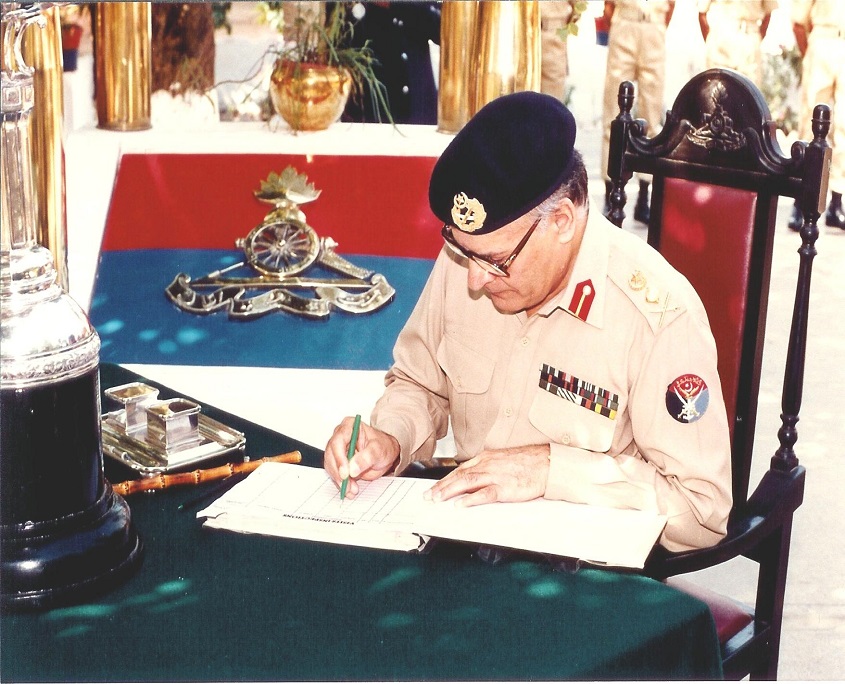
General Akhtar Abdul Rahman, the architect of the Afghan war against Soviet Union, is one of the true heroes of this land, who defeated a world super power in the Afghan jihad. He was a silent soldier who crafted the destruction plan of the Soviet Union at the hands of the Mujahedeen. He showed passion, commitment, intelligence and the warrior spirit of the great Islamic conquerors. He gave a spark to and ignited the lifeless intelligence agency of Pakistan and made it one of the finest and a dynamic spy agency of the world. Through his tireless and tacit efforts, ISI played an important part in the destruction of the Soviet Union. He was the real architect of the Soviet defeat and worked as a mason, building day and night, to turn the tables on the enemies of Islam. With his foresight, commitment and dedication he increased the power and effect of the ISI as an intelligence agency. He was a background player and executed his plans from behind the curtain.
In 1979, General Akhtar was offered a very important and coveted position of Director General Inter-Services Intelligence. He headed the intelligence agency and built it as a very effective military institution which impacted both national and international affairs. Within the span off seven years he, along with his potential and loyal team, gave life to ISI and made it one of the most vibrant and effective institution. He conceived and crafted the plans to deal with the Soviet Union through the Afghan Mujahedeen and covert guerilla fighters from Pakistan. In the wake of Soviet invasion in Afghanistan there were apprehensions that they might attack Pakistan too, so there were many potential threats to the security of Pakistan at that time. After the initial years of Soviet invasion in Afghanistan, the military leadership under General Zia decided to fight with soviets and to teach them a lesson, even before the American assistance initiated through CIA. At that time US President Jimmy Carter was entangled in the internal dilemmas and threats which emerged after the hostage crisis in Iran, so no considerable assistance was provided. In the beginning Gen Akhtar was alone in considering that he can force the Soviet forces out of Afghanistan, he was way too optimistic. He was of the view that Pakistan should support the Jihad covertly.
MARTYRDOM
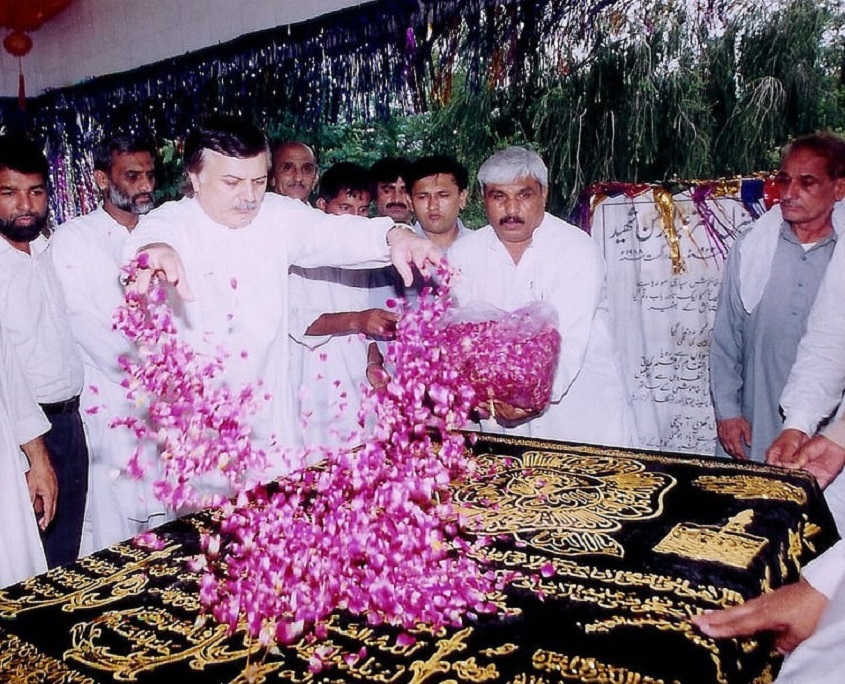
Many controversies and conspiracies are attached with the unfortunate event of 17 Aug 1988. General Akhtar Abdul Rahman along with Persistent of Pakistan General Zua ul haq, had died in a C-130 plane, Pak-1, crashed near the Sutlej river on 17 August 1988. Other high-profile civilian and military personnel also died in the crash including the US Ambassador to Pakistan, Arnold Raphel and other top brass of Pakistan’s military.
On 17 August 1988, General Akhtar Abdul Rahman with the President and senior delegation arrived in Bahawalpur. After witnessing and viewing the live fire demonstration, delegation departed from the army’s test range Tamiwali via army helicopter. At 3:40 p.m on 17 August 1988 the VIP flight took off from Bahawlpur airport. On board the C-130 plane were a total of 31 people, General Akhtar Abdul Rahman and the President of Pakistan General Zia ul Haq the US ambassador Arnold Raphel, Herbert M. Wassom, the chief of the U.S. military mission in Pakistan, and a group of senior officers from Pakistan army. The plane had been fitted with an air-conditioned VIP capsule where Zia and his American guests were seated. It was walled off from the flight crew and a passenger and baggage section in the rear. The aircraft departed Bahawalpur early, ahead of a storm. For 2 minutes and 30 seconds, it rose into a clear sky. Takeoff was smooth and without problems. At 3:51pm Bahawalpur control tower lost contact, and the plane plunged from the sky and hit the ground with such force that it was blown to pieces and wreckage scattered over a wide area. Witnesses cited in Pakistan’s official investigation said that the C-130 began to pitch “in an up-and-down motion” while flying low shortly after takeoff before going into a “near-vertical dive”, exploding on impact, killing all on board. His unfortunate death was a huge loss for Pakistan. A variety of stories are associated with the crash of C-130, from involvement of KGB, Mossad, CIA, to the indicators of placement of a bomb to suspicion of technical faults. However, concrete evidences are not available to back any story.
GENERAL AKHTAR ABDUL RAHMAN
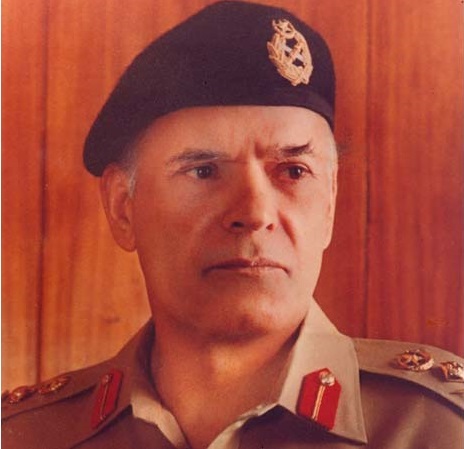
GALLERY
 First ever visit of Chairman Joint Chiefs of Staff 04 August 1987September 25, 2019 - 2:05 pm
- Presented to Major General Akhtar Abdul Rahman Khan, Adjutant General. 1978September 25, 2019 - 1:50 pm
- Farewell Dinner HQ 12 Div – Murree 25 March 1978September 25, 2019 - 1:38 pm
- GOC 12 DIV June 1976September 25, 2019 - 1:12 pm
- With compliments of The Commandant Pakistan Military AcademySeptember 20, 2019 - 11:09 am


